
You're sourcing watches and think verifying the movement's origin is about telling real from fake. But a simple "Japanese movement" request can lead to design changes and unexpected costs. The real verification goes much deeper, protecting your design, budjetti, and brand reputation.
To truly verify a movement's origin, focus on the specific model number, not just the country. Confirming the model (esim., Seiko NH35, Miyota 9015) locks in the watch's entire structure, prevents costly redesigns, and ensures your marketing claims are accurate and compliant with regulations.
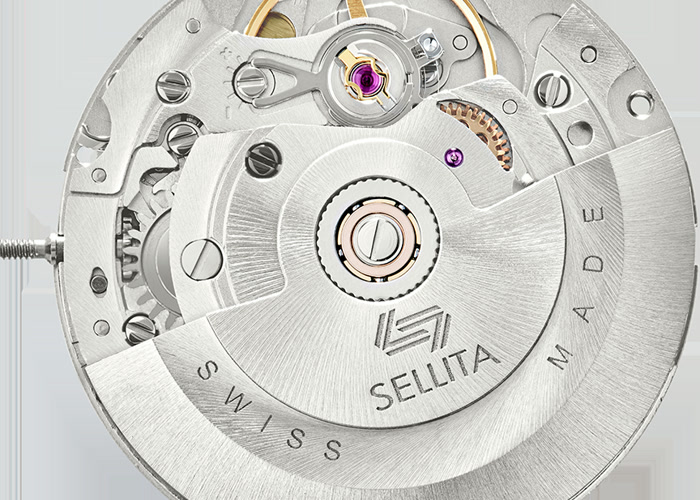
You've probably heard a lot about Swiss, japanilainen, and Chinese movements. It seems simple, right? Just pick one and you're good to go. But as a watch manufacturer with over 15 years of experience, I've seen this assumption cause more problems than any other. The conversation about movements needs to change. It's not just about where it's from; it's about what it locks you into. Let's break down what you really need to ask to protect your watch project.
Why Does the Specific Movement Model Matter More Than Its Country of Origin?
You've requested a "Japanese movement" for your watch design, thinking you've made a clear choice. But this vague request can force a complete redesign of your watch case and dial later. Specifying the exact model from the start is the key to locking in your design and budget.
A movement isn't a swappable part; it's the watch's foundation. Its dimensions—thickness, stem height, calendar position—dictate the case design, crown placement, and dial layout. Choosing a specific model upfront prevents structural rework, budget overruns, and production delays that arise from last-minute changes.
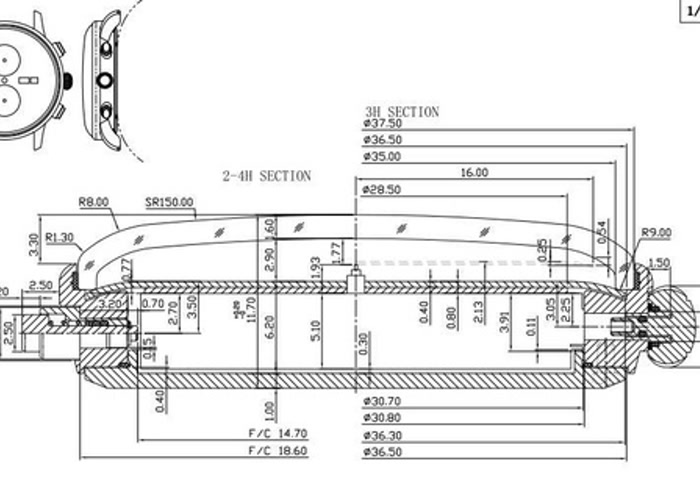
When a client tells me they want a "Japanese movement," I know we need to have a more detailed conversation. It's a dangerous starting point because it leaves too much open to interpretation. Think of the movement as the skeleton of your watch. Everything else is built around it.
Let's look at the critical dependencies:
- Case Thickness: The movement's height directly determines how thick the watch case must be.1 A slim Miyota 9-series is much thinner than a robust Seiko NH-series.
- Crown Position: The stem height (distance from the movement center to the stem) dictates exactly where the crown hole is drilled in the case. A mismatch means a whole new case.
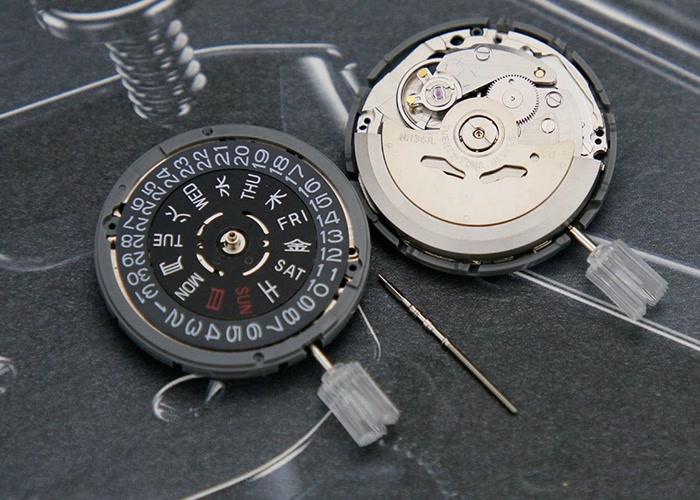
- Päivämäärä-ikkuna: The movement's date wheel position is fixed.2 If you change the movement, you'll likely have to create a new dial with the date window in a different spot.
- Kädet: The holes in watch hands are sized to fit specific movement pinions. Changing the movement often means you need a new set of custom hands.
To avoid these issues, we create a "Structural Confirmation Sheet." This is far more useful than a photo of the movement.
| Parametri | Why It Matters | Example |
|---|---|---|
| Model Number | Locks in all technical specs. | Seiko NH35 vs. Miyota 8215 |
| Paksuus | Determines minimum case thickness. | 5.32mm vs. 5.67mm |
| Stem Height | Sets the crown's vertical position. | 2.5mm vs. 2.5mm (can vary) |
| Hand Sizes | Ensures hand compatibility. | 150/100/21 vs. 152/100/17 |
| Dial Feet Position | Dictates where the dial attaches. | If they don't match, you need a new dial. |
By confirming these details before sampling, we prevent the entire project from unraveling. It’s not about us trying to be difficult; it’s about protecting your design integrity and timeline.
How Can Vague Marketing Terms for Movements Hurt Your Brand?
You're excited to market your watch with a "Swiss movement" to attract premium buyers. But using the wrong terminology can lead to angry customer reviews, platform penalties, or even legal trouble. Understanding the precise meaning of each term protects your brand's credibility and avoids compliance issues.3
Terms like "Japanese movement," "Japan movement," and "Swiss Made" are not interchangeable. Each carries specific legal and consumer expectations. Using them incorrectly can be seen as misleading advertising, damaging your reputation on platforms like Amazon and potentially violating trade regulations in your target market.
One of the most hidden risks in watch manufacturing is what I call the "marketing trap." The language you use on your website, in your Amazon listing, and on your packaging matters immensely. A small mistake here can cause big problems later. The supply chain has its own shorthand, and it doesn't always align with what is legally or ethically permissible in consumer marketing.
Let's clarify some of these common but confusing terms:
Understanding Movement Terminology
-
Japanese/Swiss Movement: This is the most common term. It usually means the movement is made by a Japanese or Swiss brand (kuten Miyota, Seiko, Ronda, Sellita). Kuitenkin, the movement itself might be assembled in another country, like Malaysia or Thailand. This is generally acceptable, but it's a fine line.
-
Japan/Swiss Made Movement: This is a much stronger claim. It implies that the movement was not only designed but also assembled and inspected in Japan or Switzerland, according to that country's regulations.
-
Swiss Made Watch: This is the strictest standard. For a watch to be labeled "Swiss Made," it must meet several criteria: the movement must be Swiss, the movement must be cased up in Switzerland, and the final inspection must be conducted in Switzerland. At least 60% of the manufacturing costs must also be Swiss-based.
Failing to distinguish these can lead to serious consequences.4 A customer who buys a "Swiss Made" watch and later finds out it only has a "Swiss movement" assembled in Asia will feel deceived. This leads to bad reviews calling your brand "misleading." Pahempaa, it can trigger an audit from Amazon or violate advertising laws. We always clarify these boundaries with our clients upfront to ensure their marketing story is both compelling and compliant.
What Can You Actually Customize on a Watch Movement?
You have a great idea to customize the movement to make your watch truly unique. But you find out that most movement factories won't even talk to you without a huge order. While deep modifications are rare, strategic customizations are possible with the right partner and approach.
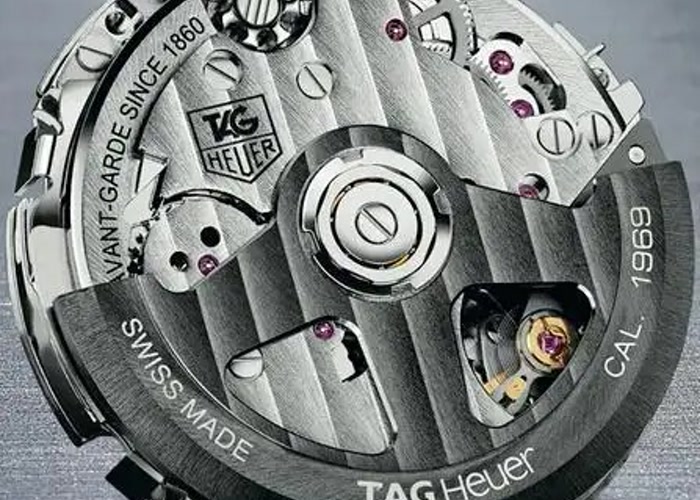
Movement customization is possible but limited and requires a minimum order quantity (MOQ) of 300-500 kappaletta. Tehtaana, we can facilitate customizations like engraving the rotor on an automatic movement or changing the language on a day-date wheel, but these are all based on an existing, confirmed movement model.
Many brand owners dream of creating a fully custom movement, but the reality is that movement manufacturing is an incredibly high-stakes, high-volume industry. The R&D and tooling costs for a new movement can run into the hundreds of thousands, or even millions, of dollars.5 For independent brands, this is almost never a viable path.
Kuitenkin, that doesn't mean you have zero options. The key is to work with an existing, reliable movement "chassis" and add your own unique touches. This is where a good manufacturing partner can help.
Here are some common movement customizations we handle for brands:
Feasible Movement Customizations (with MOQ)
-
Rotor Engraving: For automatic movements, the oscillating weight (rotor) is a perfect canvas. We can engrave your brand's logo or a unique pattern onto it. This is visible through a display case back and adds a fantastic premium touch.
-
Custom Date Wheels: Don't like the standard font on the date wheel? We can work with the movement supplier to create a custom one with your chosen typography or even a different color.
-
Day-Date Language: For movements with a day-date function, it's sometimes possible to request specific languages for the day wheel, which can be a great feature for targeting a specific international market.
It's crucial to understand that these customizations are modifications to a pre-existing base model. We can't change the fundamental architecture—like the thickness or hand sizes. All these changes require a commitment of at least 300-500 pieces per model because we have to place a special order with the movement supplier. This process is built on a foundation of a confirmed model, not a vague idea.
Johtopäätös
Lopulta, verifying a movement isn't about its origin. It's about confirming the exact model to lock in your design, prevent costly rework, and ensure your marketing claims are honest.
"Everything You Need to Know About Watch Case Sizes", https://feldmarwatch.com/everything-you-need-to-know-about-watch-case-sizes/. The height of a watch movement is a critical factor in determining the minimum thickness of the watch case, as supported by technical design principles in horology. Todistajan rooli: mekanismi; lähdetyyppi: tutkimusta. Tukee: The height of a watch movement directly determines the minimum thickness of the watch case.. ↩
"How To Fix a Stuck Date Wheel on a Seiko Watch - YouTube",
. The fixed position of a watch movement's date wheel determines the placement of the date window, as explained in horological design guides. Todistajan rooli: mekanismi; lähdetyyppi: koulutus. Tukee: The position of a watch movement's date wheel is fixed and dictates the placement of the date window on the dial.. ↩"Watch", https://en.wikipedia.org/wiki/Watch. Accurate use of terms like 'Swiss Made' and 'Japanese movement' is essential for maintaining brand credibility and legal compliance, as outlined by regulatory authorities. Todistajan rooli: asiantuntija_konsensus; lähdetyyppi: hallitus. Tukee: Understanding the precise meaning of terms like 'Swiss Made' and 'Japanese movement' protects brand credibility and ensures compliance.. ↩
"Mechanical Timepieces & Intellectual Property Protection", https://digitalcommons.pace.edu/cgi/viewcontent.cgi?article=1069&context=pipself. Mislabeling watches with terms like 'Swiss Made' can result in legal penalties and consumer backlash, as documented in industry case studies. Todistajan rooli: case_reference; lähdetyyppi: laitos. Tukee: Misusing terms like 'Swiss Made' or 'Japanese movement' can lead to serious consequences, including customer dissatisfaction and legal issues.. Laajuushuomautus: The source may focus on specific cases and not provide a comprehensive overview. ↩
"How much does it really cost to create tools for a watch...", https://www.watchuseek.com/threads/how-much-does-it-really-cost-to-create-tools-for-a-watch-movement.5371816/. The development of a new watch movement can incur R&D and tooling costs in the range of hundreds of thousands to millions of dollars, as reported in industry analyses. Todistajan rooli: tilastollinen; lähdetyyppi: tutkimusta. Tukee: Developing a new watch movement involves R&D and tooling costs that can reach hundreds of thousands or even millions of dollars.. Laajuushuomautus: The source may provide a general range without specific examples. ↩