
Har du nogensinde holdt et smukt designet ur, kun for at blive svigtet af en vaklende eller dårligt passende krone? Den lille komponent, hovedpunktet for interaktion, er vildledende kompleks. En fejl her kan kompromittere hele urets fornemmelse og funktion, forbindes direkte med bevægelsen, sag, og ring.1 For at sikre, at denne kritiske detalje er perfekt, du skal mestre OEM urkrone udviklingsproces.
OEM-urkroneudviklingsprocessen er den strukturerede fremstillingssekvens til at skabe en tilpasset krone, begyndende med indsendelse af detaljerede tekniske tegninger og specifikationer. Denne proces involverer producentgennemgang, materialevalg, værktøj, prototyping til pasform og funktionsvalidering med den specifikke sag og bevægelse, og endelig, godkendelse til masseproduktion.
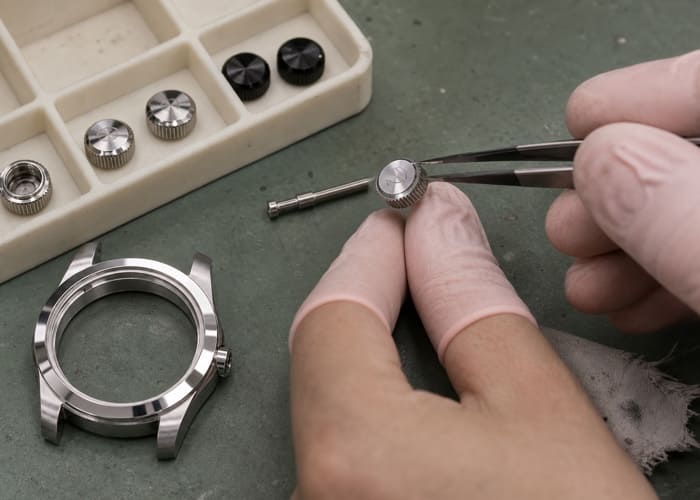
Nu hvor du har overblikket på højt niveau, du undrer dig måske over, hvilke specifikke detaljer der gør eller ødelægger projektet. Dit urs succes afhænger af at få disse detaljer lige fra begyndelsen. Lad os dykke ned i de kritiske specifikationer og trin, der er involveret.
Hvilke nøglespecifikationer definerer en brugerdefineret urkrone?
Har nogensinde modtaget en prototype, hvor kronen føles løs eller kværner, når du drejer den? Denne frustrerende oplevelse stammer ofte fra ufuldstændige eller unøjagtige indledende specifikationer. At få den tekniske fil rigtigt er ikke kun et forslag; det er grundlaget for et succesfuldt produkt. En enkelt millimeter fejl kan gøre komponenten ubrugelig.
De mest kritiske specifikationer for en brugerdefineret urkrone inkluderer dens præcise dimensioner (diameter, højde), typen af forbindelse (push-pull eller skru ned), materiale og finish, og, vigtigst af alt, dets verificerede kompatibilitet med det tilsigtede urkasserør og urværksstamme.2

Dyk dybere
Urkronen er ikke en isoleret komponent; det er broen mellem dig og urets motor. Dens design skal tage højde for flere indbyrdes forbundne dele. I min 15+ år i ureproduktion, Jeg har set flere projekter forsinket af kroneproblemer end nogen anden enkelt komponent. Det handler om detaljerne.
H3: Den indbyrdes afhængige trio: Bevægelse, Sag, og Dial
Tænk på kronen, bevægelse, og sag som en uadskillelig trio. Du kan ikke definere en uden at kende de andres nøjagtige specifikationer.
- Bevægelse: Bevægelsesmodellen (f.eks., Miyota 9015, Seiko NH35, Ronda 762) dikterer, hvilken type stilk det kræver. Stilken er metalstangen, der forbinder kronen med bevægelsen. Each movement family has a specific "tap" størrelse, som er gevindet på stammen. Kronen skal være indvendigt gevind for at matche denne tapstørrelse perfekt. At give din producent den nøjagtige bevægelsesmodel er ikke til forhandling.
- Sag: The watch case features a "case tube," et lille rør, som stammen går igennem. Kronen passer over dette rør. Til en skruet krone, kabinetrøret vil have udvendigt gevind, der passer til kronens indvendige gevind. Til en push-pull krone, pasformen er sikret med pakninger. Du skal give din producent en detaljeret tegning af sagen, specifikt kalder kasserørets diameter og længde.
- Urskive: Skivens position og tykkelse, sammen med bevægelsesholderen, bestemme den endelige nødvendige længde af stilken. Stilken vil blive skåret til i den præcise længde under montering for at sikre, at kronen flugter med kabinettet.
H3: Væsentlige dimensioner og CAD-tegninger
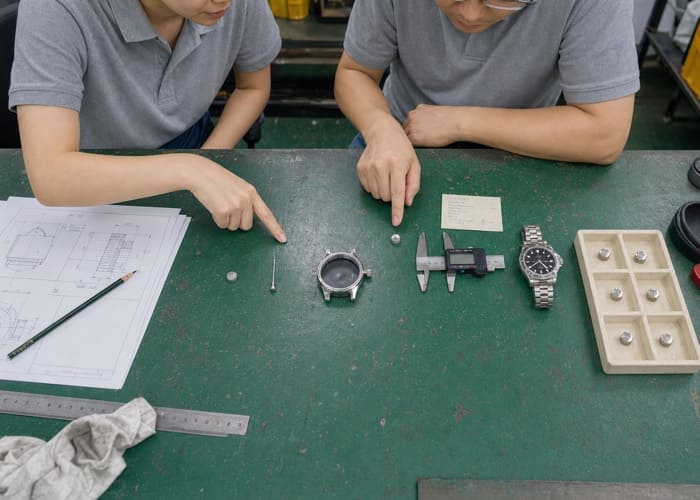
Tvetydighed er fremstillingens fjende. "I want a medium-sized crown" er ikke en specifikation. For at igangsætte OEM urkrone udviklingsproces, du skal angive præcise mål, ideelt set i en 2D eller 3D CAD-fil (.dwg, .trin).
Nøgledimensioner at specificere:
| Dimension | Beskrivelse | Typisk rækkevidde |
|---|---|---|
| Krone Diameter | Kronens samlede bredde. | 4.0mm - 8.0mm |
| Krone Højde | Den samlede tykkelse af kronen. | 2.0mm - 4.5mm |
| Stængel Tap Størrelse | Trådstørrelsen for bevægelsesstammen. | Tryk på 10 (0.90mm), Tryk på 12 (1.20mm) |
| Stolpe huldiameter | Den indvendige diameter, der passer over kasserøret. | Varierer efter sagdesign |
| Logo/design | Detaljer til gravering, prægning, eller ætsning. | N/A |
Som en af mine kunder, en succesfuld mikrobrandejer, fortalte mig engang, "The day I started providing my own CAD files was the day my sampling process got 50% hurtigere." Han havde ret. At levere dine egne designs fjerner gætværk og sikrer, at leverandøren ved præcis, hvad der skal produceres.
H3: Materiale, Efterbehandling, og branding
Den sidste hånd er det, der løfter en funktionel komponent til et signaturdesignelement.
- Materiale: Branchestandarden er 316L rustfrit stål på grund af dets holdbarhed og korrosionsbestandighed. Andre muligheder som titanium eller bronze er mulige, men er typisk forbeholdt specifikke urstile.
- Efterbehandling: Kronens finish skal matche urkassen. Fælles muligheder inkluderer poleret, børstet (satin), sandblæst, eller en kombination.
- Plettering/coating: PVD (Fysisk dampaflejring) belægninger kan påføres for at opnå farver som sort, guld, eller rosa guld.
- Branding: Et brugerdefineret logo er et must for ethvert mærke. Den kan lasergraveres, syreætset, eller præget for en 3D-effekt. Denne lille detalje tilføjer betydelig opfattet værdi.
Hvordan påvirker OEM Watch Crown-udviklingsprocessen vandmodstanden?
Du har angivet en 10 ATM rating for dit nye dykkerur, men de første prototyper fejler tryktesten. Oftere end ikke, synderen er kronen. En kompromitteret tætning ved dette indgangspunkt er den hurtigste måde at beskadige et ur med fugt, fører til dyre returneringer og et beskadiget brands omdømme.
De OEM urkrone udviklingsproces er grundlæggende for at opnå den ønskede vandmodstand. Valget mellem et push-pull eller skrue-down design, præcisionen af de bearbejdede dele, og kvaliteten af pakningerne bestemmes alle i denne fase og har direkte indflydelse på den endelige ATM-vurdering.
Dyk dybere
Vandtæthed er ikke en funktion, du blot kan tilføje til sidst; det skal konstrueres fra starten.3 Kronen er den eneste bevægelige del, der bryder forseglingen af sagen, gør dets design- og fremstillingsproces absolut kritisk.
H3: Push-Pull vs. Skruekroner
Den vigtigste beslutning, du skal tage med hensyn til kronen og vandmodstanden, er at vælge mekanismen.
- Push-Pull Kroner: Dette er den standard krone type, der findes på de fleste kjole og casual ure. Vandtæthed opnås via en eller flere gummi O-ring pakninger inde i kronen eller rundt om kabinetrøret. Når kronen skubbes ind, disse pakninger komprimeres, danner en forsegling. Imidlertid, denne tætning kan blive kompromitteret, hvis kronen ved et uheld trækkes ud, eller hvis pakningerne slides over tid.
- Skruekroner: Denne mekanisme giver en langt mere sikker tætning. Kronen har indvendige gevind, der skrues på det gevindskårne hylsterrør. Som du strammer den, det komprimerer tætningerne, skabe en robust, vandtæt barriere. Dette er standarden for dykkerure og sportsmodeller, der kræver høj vandmodstand.
Her er en typisk oversigt over, hvad du kan forvente af hver type:
| Krone Type | Typisk vandtæthedsvurdering | Almindelig urstil |
|---|---|---|
| Push-Pull | 3 hæveautomat til 5 ATM | Kjole, Minimalistisk, Mode |
| Skru ned | 10 ATM, 20 ATM, 30 ATM+ | Dyk, Sport, Felt, Pilot |
Når vi udvikler et ur til en kunde rettet mod en 20 ATM rating, en skruekrone er ikke valgfri – det er et obligatorisk krav, der diskuteres i vores allerførste tekniske gennemgang.
H3: De ubesungne helte: Pakninger og O-ringe
Inde i hver vandafvisende krone er der små O-ringe af gummi eller silikone. Deres kvalitet og placering er altafgørende. Under udviklingsprocessen, vi specificerer:
- Antal pakninger: En højtydende skruekrone kan have to, tre, eller endda fire pakninger - nogle inde i selve kronen og en anden ved bunden af kabinetrøret.
- Materiale: Pakningsmaterialet skal være holdbart og modstandsdygtigt over for kompression, hvor den mister sin elasticitet over tid. Vi køber højkvalitets pakninger for at sikre langsigtet ydeevne.
- Tolerancer: Rillerne, hvor pakningerne sidder, skal bearbejdes med ekstrem præcision. Hvis en rille er for stor, pakningen vil ikke komprimeres ordentligt. Hvis den er for lille, pakningen kan blive klippet eller beskadiget, når kronen betjenes.
H3: Kvalitetskontrol for en perfekt forsegling
En veldesignet krone er kun effektiv, hvis den er fremstillet korrekt. Det er her kvalitetskontroldelen af OEM urkrone udviklingsproces kommer ind.
- Inspektion af indgående komponent: Vi inspicerer de rå bearbejdede kroner og kasserør for at sikre, at de opfylder de dimensionelle tolerancer, der er specificeret i CAD-tegningerne. Vi bruger digitale målemarkører og andre måleværktøjer til dette.
- Samling inspektion: Under montering, vi sikrer, at stilken er skåret til den perfekte længde, og at kronen fungerer jævnt uden slibning.
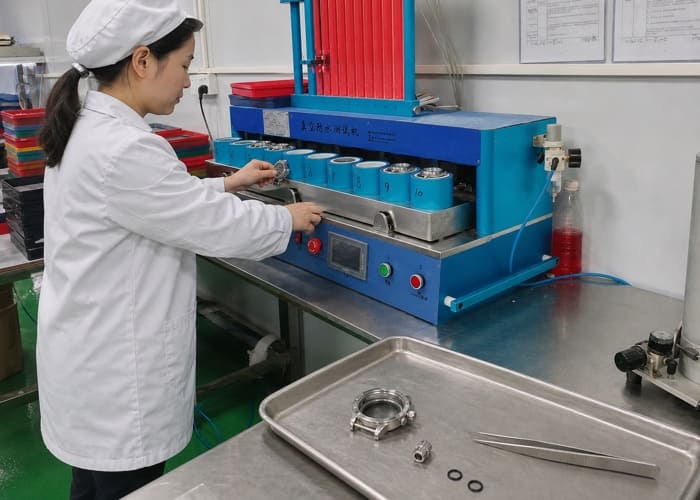
- Vandmodstandstest: Hvert ur, vi producerer, gennemgår vandmodstandstest. For lavere vurderinger (f.eks., 5 ATM), vi bruger en lufttrykstester, der registrerer lækager ved at måle for et trykfald. For højere vurderinger (10 ATM+), ure nedsænkes i en højtryksvandtank for at simulere dybvandsforhold og kontrolleres derefter for tegn på fugtindtrængning. Et ur, der fejler, går tilbage til analyse, og crown-case-grænsefladen er næsten altid det første sted, vi tjekker.
Hvad er trinene i en typisk OEM Watch Crown-udviklingsproces?
Det er nemt at sende din producent et inspirationsbillede, men hvad sker der mellem det og at holde en perfekt fysisk prøve? Fremstillingsfasen kan føles som en sort boks, efterlader brandejere bekymrede over tidslinjer og kvalitet. Lad os trække gardinet tilbage og afmystificere rejsen trin for trin.
De OEM urkrone udviklingsproces følger en klar vej: det begynder med din indsendelse af detaljerede tekniske filer, går over til producentgennemgang og værktøj, derefter til fysisk prototyping og evaluering, og afsluttes med din endelige godkendelse, som sætter grønt lys for masseproduktion.
Dyk dybere
At følge en struktureret proces er den bedste måde at minimere fejl på, styre tidslinjer, og sørg for, at det endelige produkt matcher din vision. Hos Ohlala Watch, vi guider vores kunder gennem denne proces for at sikre et glat og forudsigeligt resultat.
Trin 1: Design & Indsendelse af tekniske specifikationer
Dette er grundlaget for hele projektet. Som jeg nævnte tidligere, du, klienten, sidder i førersædet. For at komme i gang, du skal give:
- En detaljeret tegning: En 2D- eller 3D-CAD-fil er guldstandarden. Den skal omfatte alle kritiske dimensioner, tolerancer, og tværsnit.
- Tilknyttede komponentoplysninger: Du skal fortælle os hvilken bevægelse, sag, og urskive kronen vil blive parret med. Uden disse oplysninger, vi kan ikke verificere kompatibilitet.
- Materiale- og finishkrav: Angiv 316L rustfrit stål, den ønskede finish (poleret, børstet), enhver PVD-belægningsfarve, og detaljer til logoet.
Denne indledende datapakke er den vigtigste faktor for succes. En komplet pakke giver os mulighed for hurtigt at komme videre; en ufuldstændig en fører til en lang frem og tilbage af spørgsmål.
Trin 2: DFM (Design til fremstilling) Gennemgå
Når vi modtager din tekniske pakke, vores ingeniørteam udfører en DFM-gennemgang. Vi følger ikke bare blindt instruktionerne; vi bruger vores erfaring til at sikre, at designet er praktisk at producere.
I løbet af denne fase, vi kan give feedback som f.eks:
- "The walls on this crown design are too thin for robust engraving. Vi anbefaler at øge tykkelsen med 0,3 mm."
- "The specified internal threading is not compatible with the Seiko NH35 stem. Vi skal justere det til et tryk 10 (0.90mm) tråd."
- "For a 10 ATM rating, vi anbefaler kraftigt at ændre dette design fra et push-pull- til et skrue-down-system."
Denne samarbejdsgennemgang forhindrer dyre fejl og sikrer, at den endelige komponent ikke kun er smuk, men også funktionel og holdbar.
Trin 3: Værktøj og prototyping
Med designet færdiggjort og godkendt, vi går over til værktøj. Til en helt tilpasset kroneform, en ny form eller et specifikt sæt CNC-bearbejdningsprogrammer skal oprettes. Dette er en engangsopsætningsomkostning inkluderet i det samlede prøveudviklingsgebyr.
Efter værktøjet er færdigt, vi producerer de første fysiske prøver af kronen. Dette gøres typisk som en del af den komplette urprototype. Prøvegennemløbstiden, inklusive kronen, er generelt mellem 30 og 90 dage, afhængig af kompleksitet.
Trin 4: Prøveevaluering og revision
Dette er sandhedens øjeblik. Vi sender dig de komplette urprototyper. Din opgave er at evaluere kronen omhyggeligt:
- Tilpas og finish: Sidder kronen flugt mod sagen? Passer polering eller børstning perfekt til sagen?
- Fungere: Trækker den ud til de korrekte positioner for indstilling af dato og klokkeslæt? Hvis det er en skruet krone, tråder det glat og sikkert? Føles det rigtigt at vikle bevægelsen?
- Æstetik: Er logoet sprødt og centreret? Passer det til din designfil?
Hvis der er behov for justeringer, du giver feedback, og vi går ind i en revisionsløkke. Vi producerer muligvis et nyt sæt prøver med de ønskede ændringer.
Trin 5: Masseproduktionsgodkendelse
Når du er det 100% tilfreds med prøven og giv din skriftlige godkendelse, du har officielt låst designet. This approved prototype becomes the "golden sample"—the standard against which all mass-produced units will be measured. Der kan ikke foretages yderligere ændringer uden at starte en ny udviklingsproces. Med din godkendelse, vi begynder at skaffe råvarer og planlægge bulkproduktionen af din ordre, som typisk tager 45 til 60 dage.
Ofte stillede spørgsmål
Hvor meget koster det at udvikle en tilpasset urkrone?
Prisen oplyses sjældent særskilt. Det er næsten altid samlet i det samlede prøveudviklingsgebyr for en ny urmodel, som dækker værktøj og prototyping til alle brugerdefinerede komponenter (sag, urskive, krone). De endelige omkostninger afhænger af kronens kompleksitet, materiale, og om en ny form er påkrævet.
Kan jeg sætte mit mærkes logo på urkronen?
Absolut. Dette er en af de mest almindelige og vigtige tilpasninger i OEM urkrone udviklingsproces. Logoer kan lasergraveres for skarpe detaljer, syreætset for et blødere look, eller endda præget (hævet) bruge en tilpasset form til en præmie, tredimensionel effekt.4
Hvad er den mindste ordremængde (MOQ) til tilpassede kroner?
MOQ er ikke til kronen alene, men til hele urmodellen. Fordi kronen er udviklet specifikt til en bestemt kombination af etui og bevægelse, det er knyttet til modellens produktionsforløb. Hos vores virksomhed, MOQ er typisk mellem 300 og 500 styk pr urmodel.
Hvordan påvirker bevægelsesvalget kronens design?
Bevægelsesvalget er kritisk. Det bestemmer den specifikke stilk, der vil blive brugt, som har en unik diameter og gevindstørrelse (f.eks., Tryk på 10 til 0,90 mm). Kronen skal bearbejdes med et perfekt afstemt indvendigt gevind for at forbinde til denne frempind, så du kan spole uret og indstille tiden.5
Konklusion
Urkronen, skønt lille, er et vidnesbyrd om ordsproget om, at detaljer betyder noget. Det er en kompleks komponent, hvis succes afhænger af den tætte integration af design, teknik, og fremstilling. En succesfuld OEM urkrone udviklingsproces handler ikke om held; det handler om præcision, meddelelse, og en klar, struktureret arbejdsgang. Ved at levere detaljerede CAD-tegninger, angivelse af den korrekte bevægelse og kasseparring, og forstå den kritiske rolle af pakninger og skruemekanismer for vandmodstand, du placerer dig selv på vejen til et fejlfrit slutprodukt. Denne metodiske tilgang forvandler et potentielt fejlpunkt til et signaturtræk ved dit brands kvalitet.
Hvis du er klar til at skabe en skræddersyet urkollektion, hvor hver detalje er udført til perfektion, vores team hos Ohlala Watch er her for at hjælpe. Lad os diskutere din vision og gøre dine designs til virkelighed. Kontakt os på debbie.p@ohlalawatch.com eller besøg vores kontakt side for at starte samtalen.
"Why Watch Cases Are Designed Around Specific Movements", https://forgeandcrown.com/blogs/reference-library/why-watch-cases-are-designed-around-specific-movements?srsltid=AfmBOorG1GlW6o5UE23H9xiEjD-G_oiuMFtyYRMPd4md59YEMuw8tksl. Forskning i urfremstillingsmekanismer fremhæver kronens kritiske rolle i at sikre problemfri interaktion med urværket, sag, og ring, understreger, at designfejl kan føre til funktionelle problemer såsom fejljustering eller dårlig tætning. Bevis rolle: mekanisme; kildetype: forskning. Understøtter: Sammenkoblingen mellem kronen, bevægelse, sag, og urskive og hvordan designfejl kan påvirke funktionaliteten.. Omfangsnote: Kilden kan fokusere på generelle urmagerprincipper frem for specifikke casestudier. ↩
"Our Complete Guide to Watch Crown Customization", https://usa.crystaltimes.net/our-complete-guide-to-watch-crown-customization/?srsltid=AfmBOoq9LCZo6LZodhbmC93riG6M-xfFbK0hmWOfnrvlY8XD7n-MaXt0. Uddannelsesressourcer om urdesign understreger, at præcise dimensioner, forbindelsestype, materiale, og kompatibilitet er afgørende for at sikre korrekt kronefunktionalitet og integration med andre komponenter. Bevis rolle: ekspert_konsensus; kildetype: undervisning. Understøtter: Betydningen af disse specifikationer for at sikre funktionaliteten og kompatibiliteten af tilpassede urkroner.. Omfangsnote: Kilden adresserer muligvis ikke alle specifikationer i forbindelse med specialfremstilling. ↩
"Inside the Case – How Water Resistance Really Works", https://definewatches.com.au/the-watch-journal/articles/inside-the-case-how-water-resistance-really-works/?srsltid=AfmBOopyiTCLIy2G-QgJ0_IAzaywE6nD6CYiEZtz5m8n4nRi4TWGMiHK. Uddannelsesressourcer om urteknik forklarer, at vandmodstand skal integreres i designfasen, da det involverer specifikke strukturelle og materielle overvejelser. Bevis rolle: mekanisme; kildetype: undervisning. Understøtter: Nødvendigheden af at inkorporere vandmodstand i den indledende designfase af ure.. Omfangsnote: Kilden kan fokusere på generelle principper snarere end specifikke fremstillingsprocesser. ↩
"Laser Marking vs. Gravering vs. Ætsning - Differences and Applications", https://www.xometry.com/resources/blog/laser-marking-vs-engraving/. Uddannelsesressourcer om tilpasning af ur bekræfter, at lasergravering, syreætsning, og prægning er standardmetoder til påføring af logoer på urkroner. Bevis rolle: generel_support; kildetype: undervisning. Understøtter: Brug af lasergravering, syreætsning, og prægning til påføring af logoer på urkroner.. Omfangsnote: Kilden omhandler muligvis ikke de relative omkostninger eller holdbarheden af disse metoder. ↩
"Screw down crown- indvendig vs udvendig tråd? Hvilket er bedre?", https://www.watchuseek.com/threads/screw-down-crown-inner-vs-outer-thread-which-is-better.5529422/. Forskning i integration af urværker fremhæver vigtigheden af trådkompatibilitet mellem kroner og stilke for at sikre jævn oprulning og tidsindstilling.. Bevis rolle: mekanisme; kildetype: forskning. Understøtter: Nødvendigheden af at matche indvendige kronetråde til bevægelsesstammer for korrekt funktionalitet.. Omfangsnote: Kilden kan fokusere på specifikke bevægelsesmodeller snarere end generelle standarder. ↩