
Вы когда-нибудь задумывались, почему одни кварцевые часы продаются по такой цене? $50 в то время как другой, на вид похожий, затраты $500? Budgeting for a new watch collection can feel like navigating a minefield of hidden costs. Underestimate the budget, and you risk compromising quality; overestimate it, and your profit margins evaporate. A clear understanding of the quartz watch manufacturing cost is the first step toward building a successful brand.
The factory cost for a quartz watch varies significantly based on materials.1 A basic alloy case quartz watch can cost under $10-$20 доллар США, while a higher-quality 316L stainless steel quartz watch typically has a manufacturing cost of $20 к $40 доллар США. The final price depends on the movement, случай, кристалл, and other custom specifications.
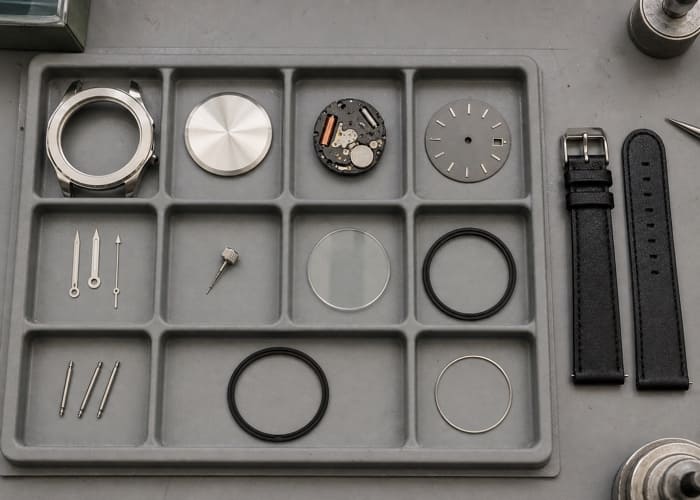
That price range gives you a starting point, but the final cost is truly a sum of its parts. To budget accurately and make informed decisions for your brand, you need to understand where every dollar goes. Let's break down the key components that drive the final factory price.
How Do Movements Impact the Cost?
You know the movement is the heart of the watch, but it's easy to underestimate how much its origin and complexity influence the final price tag. Choosing the wrong movement can mean overpaying for features your customers don't need or, worse, failing to meet their quality expectations.
The movement is one of the most significant cost differentiators. Basic Chinese or Japanese quartz movements are incredibly affordable and reliable for entry-level watches, while premium Swiss quartz movements from brands like Ronda or Sellita add prestige and a higher cost to the final product.2
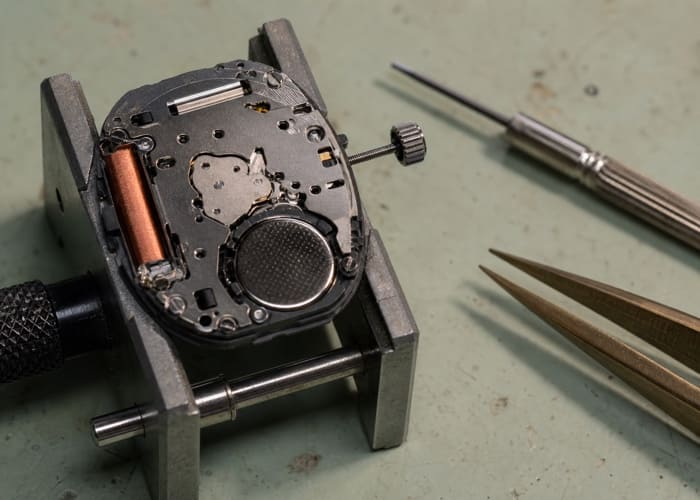
Dive Deeper: A Movement for Every Budget
The choice of movement is a strategic decision that aligns your product's quality with your brand's market position. As a manufacturer, I've worked with the full spectrum, and here’s how I see the breakdown.
H3: Japanese Quartz Movements (The Workhorse)
For most independent watch brands, Japanese movements from manufacturers like Миёта (Гражданин) и Сейко (TMI/Hattori) hit the sweet spot. They are globally recognized for their exceptional reliability, longevity, and affordability.
- Cost: A standard three-hand Miyota or Seiko quartz movement can cost just a few dollars.
- Value: They offer fantastic performance for the price, rarely fail, and provide years of accurate timekeeping. This is why they are the default choice for brands creating watches in the $20-$40 factory cost range. For us, it's the standard we recommend for achieving a balance of quality and value.
H3: Swiss Quartz Movements (The Prestige Play)
When a brand wants to use "Swiss Made" or "Swiss Movement" in its marketing, they opt for movements from Swiss makers like Ронда или Селлита.
- Cost: A basic Swiss quartz movement is significantly more expensive than a Japanese equivalent, often starting around $10 and going up from there.
- Value: The primary value is brand perception and prestige. While their performance is excellent, it's not dramatically more accurate or reliable than a high-quality Japanese movement for everyday use. The "Swiss" name carries marketing weight that can justify a higher retail price. This is a choice driven by branding strategy more than pure technical necessity.
H3: Chronograph and Multi-Function Movements
Complexity directly translates to cost. A simple three-hand (hour, минута, second) movement is the most affordable. If your design includes a date window, that adds a small cost. If it's a chronograph with subdials and pushers, the cost increases substantially. A chronograph movement is mechanically more complex, requires a case with openings for pushers, and involves more intricate assembly, all of which drive up the quartz watch manufacturing cost.
Why Does the Watch Case Material Matter So Much for Cost?
The watch case seems straightforward, but this single choice can literally double your unit cost. Are you certain you're selecting the right material that aligns with your brand's price point, durability promise, and target customer? An incorrect choice here can lead to unhappy customers or an uncompetitive product.
The case material is a primary driver of the final unit price. A zinc alloy case is the most budget-friendly option, ideal for promotional or fashion watches under the $20 mark. Однако, 316л нержавеющая сталь offers far superior durability and a premium feel, forming the foundation for watches in the $20-$40 factory cost range and significantly influencing the overall quartz watch manufacturing cost.
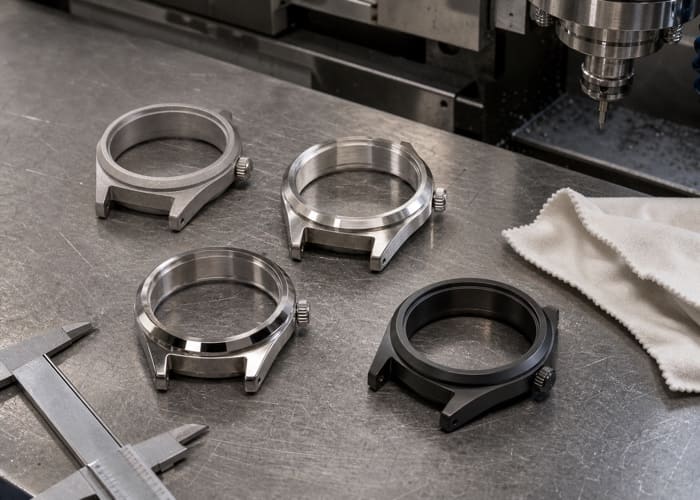
Dive Deeper: Alloy vs. Нержавеющая сталь
When I provide a quote, the first question after the design is almost always about the case material. It has the single biggest impact on the watch's feel, longevity, and cost.
H3: Zinc Alloy Cases — The Fast Fashion Choice
For brands creating trendy, lower-priced watches, zinc alloy is a common choice.
- Pros: It's inexpensive and easy to mold into various shapes through casting, which reduces machining costs. This is how some watches can be produced for under $10.
- Cons: Alloy is softer and more prone to scratches and dents. It cannot be re-polished. Most importantly, it is often plated (например, with a chrome finish), and that plating can wear off over time, revealing the dull metal underneath. For some wearers, it can also cause skin irritation. From a quality control perspective, ensuring consistent and durable plating is a key challenge.
H3: 316L Stainless Steel — The Industry Standard
For any brand building a reputation for quality and durability, 316L stainless steel is the way to go. This is what I refer to when I mention a ~$20-$40 manufacturing cost.
- Pros: 316L steel is a "surgical-grade" alloy known for its exceptional corrosion resistance, strength, and hypoallergenic properties. It has a satisfying weight and feel that customers associate with quality. Scratches can be polished out, giving the watch a much longer life.
- Cons: The raw material is more expensive, and it's a much harder metal. This means it requires more sophisticated CNC machining and takes longer to cut and finish, which adds to the labor and tooling costs. The result, однако, is a far superior product that justifies a higher retail price.
H3: The Impact of Finishing
Beyond the raw material, the case finish adds another layer of cost. A simple high-polish finish is standard. А brushed finish requires an extra step. A sandblasted or matte finish is another option. The most significant cost addition is ПВД (Physical Vapor Deposition) coating, used to create black, золото, or rose gold finishes. PVD coating is a complex process that adds several dollars to the unit cost but is essential for creating popular colorways.
What Other Components Contribute to the Quartz Watch Manufacturing Cost?
You've budgeted for a Japanese movement and a stainless steel case, but surprise costs are still popping up. Hidden expenses in the dial, кристалл, and strap can derail your budget if you aren't prepared. A beautiful design on paper can become unexpectedly expensive during production.
Beyond the core movement and case, significant costs come from the crystal, ремень, набирать номер, and water resistance rating. Each of these components presents a spectrum of customization options with corresponding price points that contribute to the final quartz watch manufacturing cost.
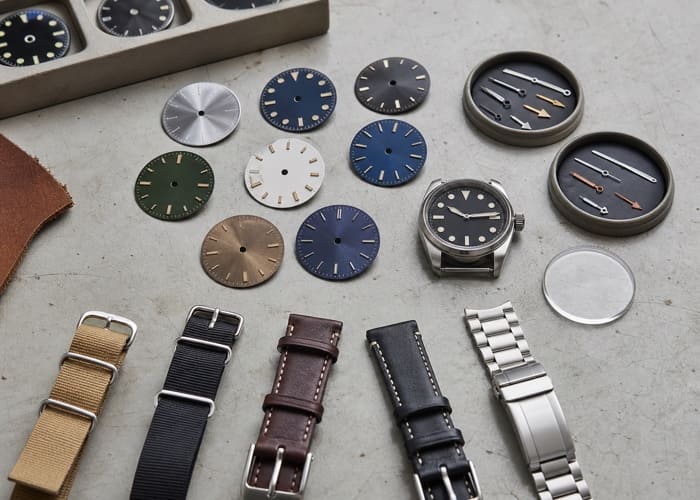
Dive Deeper: The Details That Define the Watch
As an OEM partner, my job is to help brands see how these "smaller" details add up. A few dollars here and there can make a huge difference across a production run of 500 единицы. Here's a breakdown of the other critical components.
| Компонент | Стандартный (Lower Cost) | Premium (Higher Cost) | Cost Impact |
|---|---|---|---|
| Кристалл | Закаленное минеральное стекло | Сапфировый кристалл | Середина |
| Ремень | PU Leather, Нейлон | Натуральная кожа, Браслет из нержавеющей стали | Высокий |
| Циферблат | Simple Flat Print | Applied Indices, Sunray Finish, Multi-Layer | Середина |
| Водонепроницаемость | 3 банкомат (Splash-proof) | 10 банкомат / 20 банкомат (with Screw-down Crown) | Середина |
| Case Coating | None (Polished Steel) | PVD Coating (Черный, Золото, Розовое золото) | Высокий |
Кристалл: Mineral vs. Sapphire
The default for most watches is a hardened mineral glass. It offers good clarity and decent scratch resistance for the price. Однако, upgrading to a sapphire crystal is one of the most impactful quality improvements you can make. Sapphire is almost impossible to scratch in everyday use (it scores a 9 on the Mohs hardness scale, just below diamond). This upgrade typically adds several dollars per unit but is a powerful marketing feature that customers who value longevity will appreciate.
Strap or Bracelet
The strap can be a huge variable. A basic nylon or PU (polyurethane) leather strap is very inexpensive. Upgrading to Натуральная кожа adds a few dollars. The biggest cost jump comes with a solid 316L stainless steel bracelet. A well-made bracelet involves many individual links, complex finishing, and a custom-machined clasp.3 In some cases, the bracelet can cost nearly as much as the watch head itself.
Dial and Hands
Простой, flat, pad-printed dial is the most cost-effective. Costs start to climb as you add complexity. Applied indices (separate metal markers glued to the dial) cost more than printed ones. А sunray finish or a multi-layered "sandwich" dial requires extra manufacturing steps. Custom-molded hands or hands with generous C3 Super-LumiNova application also add to the final price.
Водонепроницаемость
Achieving a basic 3 ATM or 5 ATM water resistance rating (suitable for rain and splashes) is standard.4 If you want a 10 ATM or 20 ATM rating (suitable for swimming), the engineering requirements become stricter. This often necessitates a screw-down crown and thicker case back gaskets, adding to both component and assembly costs.
Часто задаваемые вопросы
Какой минимальный объем заказа (минимальный заказ) for custom quartz watches?
For most OEM manufacturers, including us, the typical MOQ is between 300 к 500 штук на модель. This quantity allows us to manage the supply chain efficiently and offer a competitive price by ordering components in bulk.
How does a chronograph function affect the quartz watch manufacturing cost?
A chronograph function significantly increases cost.5 It requires a more complex and expensive quartz movement, a case with additional holes for the pushers, the pushers themselves, and a more intricate dial with subdials. This adds to material, сборка, and quality control time.
Is a Swiss quartz movement always better than a Japanese one?
"Better" depends on your brand's goals. Japanese movements from Miyota or Seiko offer world-class reliability and value.6 A Swiss movement from Ronda offers excellent performance plus the powerful "Swiss" brand association, which can justify a higher retail price. For pure performance-for-price, Japanese is hard to beat.
How long does it take to develop and produce a custom quartz watch?
The process has two main phases. The sampling stage, which includes technical drawings and creating physical prototypes for your approval, typically takes 30 к 90 дни. Once you approve the sample, mass production for your order usually takes another 45 к 60 дни.
Заключение
Ultimately, тот quartz watch manufacturing cost is not one single number but a calculation based on your strategic choices. For under $20, you can produce an alloy watch perfect for a fashion-forward, entry-level market. For $20-$40, you can build a robust 316L stainless steel watch with a reliable Japanese movement that will last for years and build brand loyalty. Understanding that the movement, материал корпуса, and finishing choices are your biggest cost levers allows you to design a watch that perfectly aligns with your brand's vision and budget.
If you're ready to get a precise quote for your watch collection, our team is here to help. We can walk you through these options and provide a detailed cost breakdown based on your unique design. Свяжитесь с нами по адресу debbie.p@ohlalawatch.com или посетите наш страница контактов чтобы начать разговор.
"How Much Does It Really Cost to Produce a Watch from Scratch?",
. A study or industry report detailing the manufacturing costs of quartz watches by material type, such as alloy and stainless steel, would support the claim. Доказательная роль: General_support; тип источника: исследовать. Поддерживает: The cost ranges for quartz watch manufacturing based on case materials.. Примечание по объему: Cost ranges may vary by region and manufacturer, so the figures might not be universally applicable. ↩"Ronda Quartz Watch Movements", https://perrinwatchparts.com/en-us/collections/rond-quartz-watch-movements. An industry report or comparative analysis of Swiss and Japanese quartz movements would validate the claim. Доказательная роль: General_support; тип источника: исследовать. Поддерживает: The higher cost and perceived prestige of Swiss quartz movements compared to Japanese ones.. Примечание по объему: Prestige is subjective and may vary by consumer demographics. ↩
"How to make stainless steel watch strap",
. A manufacturing study or technical report on stainless steel bracelet production would validate the claim. Доказательная роль: механизм; тип источника: исследовать. Поддерживает: The intricate manufacturing processes involved in producing stainless steel watch bracelets.. Примечание по объему: Complexity may vary depending on design and production scale. ↩"Water Resistant mark", https://en.wikipedia.org/wiki/Water_Resistant_mark. An institutional guideline or industry standard document on watch water resistance ratings would support this claim. Доказательная роль: определение; тип источника: учреждение. Поддерживает: The standard water resistance ratings of 3 ATM and 5 ATM for watches.. Примечание по объему: Standards may vary by region or manufacturer. ↩
"Chronograph", https://en.wikipedia.org/wiki/Chronograph. A technical report or industry analysis on the cost implications of chronograph functions would validate the claim. Доказательная роль: механизм; тип источника: исследовать. Поддерживает: The increased cost of quartz watches due to chronograph functions.. Примечание по объему: Cost increases may vary depending on the specific chronograph design and movement used. ↩
"MIYOTA MOVEMENT", https://miyotamovement.com/. An industry report or expert review on the performance and reputation of Miyota and Seiko movements would support this claim. Доказательная роль: Expert_consensus; тип источника: исследовать. Поддерживает: The global recognition and reliability of Miyota and Seiko quartz movements.. Примечание по объему: Recognition may vary by market and consumer demographics. ↩