
You’ve perfected your design, the branding is sharp, and you're ready to create your first watch collection. But a hidden barrier often trips up new brands: the minimum order quantity (موك) for components. This is especially true for the heart of the watch, the movement. Finding quality low MOQ watch movements is the critical first step to launching your vision without tying up all your capital in inventory.
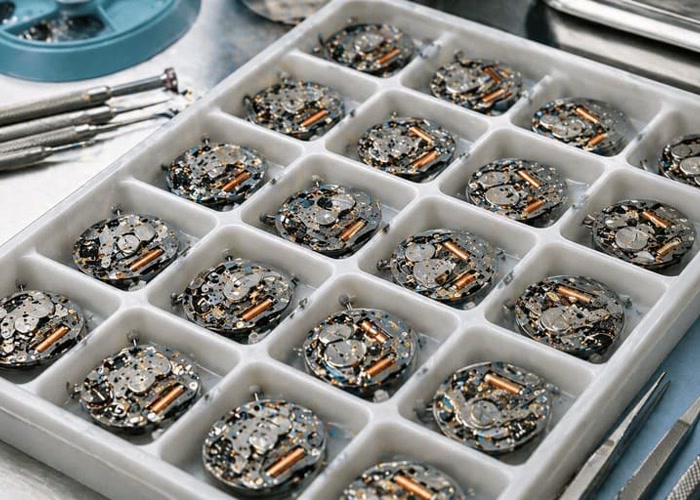
For new brands seeking to balance cost, جودة, and flexibility, Japanese movements from manufacturers like Miyota (مواطن) and Seiko (TMI/NH Series) are unequivocally the best choice for low MOQ watch movements.1 They maintain ready inventory, allowing for smaller batch orders, whereas Swiss movements are typically made-to-order with significantly higher MOQs.
This distinction between Japanese and Swiss supply chains is more than just a minor detail—it can be the deciding factor in whether your project gets off the ground. Let's dive deeper into why this is the case and what specific models you should be looking at.
Why Do Watch Movements Have MOQs in the First Place?
Have you ever wondered why you can't just order five or ten movements to test a new design? The reality of global manufacturing is built on a complex supply chain. The MOQ isn't an arbitrary number; it's a reflection of the economics of production and distribution that make the entire system work.
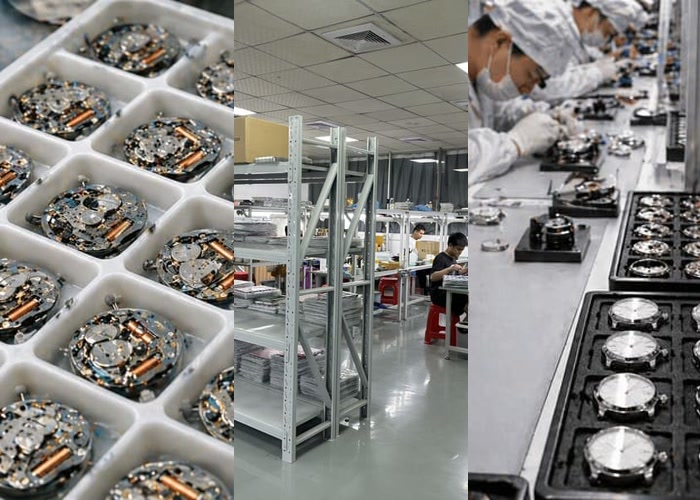
The minimum order quantity for a watch movement is set by the economics of the supply chain. Manufacturers produce in massive quantities for efficiency, and distributors purchase in large volumes, breaking them down into smaller (but still substantial) wholesale lots for factories like ours, often starting at 50 قطعة لكل نموذج.
الغوص أعمق: The Economics of the Movement Supply Chain
The journey of a watch movement from its creation to its installation in your watch involves several layers, each with its own business model. Understanding this helps clarify why MOQs exist.
-
The Manufacturer (على سبيل المثال, ميوتا, سايكو, سيليتا): These companies operate massive, highly automated facilities. To be profitable, they need to produce hundreds of thousands, if not millions, of units of a single model. Their primary customers are not small watch brands but large-scale distributors and major watch conglomerates. They sell in enormous volumes—think pallets, not boxes.
-
The Distributor/Wholesaler: These are the crucial middlemen. They buy movements by the thousand from the manufacturer and stock them in warehouses in key regions like Hong Kong or Europe. Their business is to break down this bulk inventory into more manageable quantities for OEM/ODM factories. Based on my experience in Shenzhen, a typical order from a distributor is sold in trays or boxes, often containing 50 أو 100 وحدات. This is where the first meaningful MOQ for a factory appears. If I need 20 movements for a small prototype run, the distributor will still require me to purchase their minimum of 50.
-
The OEM/ODM Factory (Like Us): When we quote an MOQ for a full watch project (عادة 300-500 قِطَع), we are balancing the MOQs of all the components involved.
- الحركات: We may need to buy 300 identical movements.
- حالات: The case factory has its own tooling and production line setup costs, resulting in an MOQ of 300-500 قِطَع.
- بطلب, الأيدي, الأشرطة: Each of these suppliers also has minimums.
The final watch MOQ is the highest common denominator required to get all suppliers to start production efficiently. Trying to produce just 50 finished watches would be economically unfeasible because we would be left with hundreds of unused, pre-purchased components from other suppliers.
This entire structure is built on economies of scale. The cost per unit drops significantly as volume increases, and MOQs are the mechanism that ensures each player in the chain can operate profitably.
What Are the Best Japanese Low MOQ Watch Movements?
Knowing that Japanese movements are the smart choice for a new brand is one thing, but which ones should be on your radar? With so many options available, picking the right model can feel like a daunting task. The key is to focus on the reliable workhorses that the microbrand world is built on.
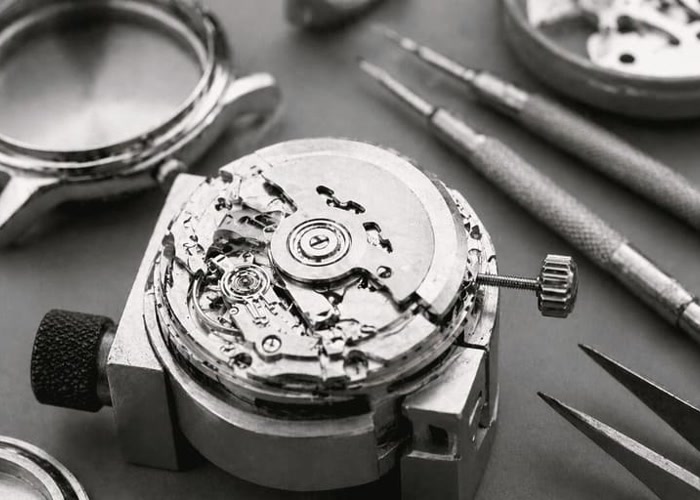
For a new brand, the best low MOQ watch movements are industry-standard Japanese models like the Miyota 2035 (quartz) and the Seiko NH35 (automatic). Their widespread availability and the manufacturers' practice of keeping stock on hand mean they can be sourced quickly and in flexible quantities.
الغوص أعمق: A Breakdown of Top Japanese Movements
Over my 15 سنوات في تصنيع الساعات, I've seen countless brands successfully launch using a handful of trusted Japanese movements. They offer the perfect blend of reliability, affordability, و, الأهم من ذلك, إمكانية الوصول.
For Quartz Watches: Miyota's Dominance
When it comes to quartz, ميوتا (a part of the Citizen Group) is the undisputed king for small and medium-sized brands.
- ميوتا 2035 Family: This is one of the most produced quartz movements in the world. It's incredibly inexpensive, موثوق, and has a battery life of around 3 سنين. Because it's so common, distributors hold vast quantities of stock. It's the go-to for fashion watches and entry-level pieces.
- Miyota Super 2035: An upgraded version with a longer 5-year battery life and higher accuracy.
- Chronograph Movements (على سبيل المثال, Miyota 6S21): For brands wanting to add a chronograph function without the cost of a mechanical one, Miyota offers robust and affordable quartz chronograph options.
The key benefit here is inventory. Distributors in Hong Kong and Shenzhen have millions of these movements ready to go. This means we can often procure them in a matter of days, and the 50-piece MOQ from the distributor is rarely an issue.
For Automatic Watches: Seiko and Miyota Workhorses
This is where things get exciting for microbrands. An automatic movement gives a watch its soul, and Japanese options make it possible without a five-figure investment.
-
Seiko Instruments (TMI) NH35: This is arguably the most popular automatic movement among microbrands today. It's the unbranded version of Seiko's own 4R36 movement.
- Features: 24 jewels, hacking (the second-hand stops when the crown is pulled out), hand-winding capability, and a date complication.
- Why it's great for low MOQ: Seiko produces the NH35 in massive volumes for its own watches and for third parties. Like Miyota's quartz movements, the NH35 is heavily stocked by distributors. It provides the core features of a modern automatic movement at an incredible price point.
-
ميوتا 8215 & 9015:
- ميوتا 8215: A long-standing, ultra-reliable automatic movement. It's known for its durability but lacks the hacking feature of the NH35. It's a great budget-friendly automatic option.
- ميوتا 9015: A premium, slim automatic movement that competes with entry-level Swiss movements. It operates at a higher frequency (28,800 bph) for a smoother second-hand sweep and is much thinner than the NH35 or 8215, allowing for sleeker watch designs. While more expensive, it is still readily available with a low MOQ.
Here is a quick comparison:
| حركة | يكتب | Key Features | أفضل ل | Low MOQ Friendliness |
|---|---|---|---|---|
| ميوتا 2035 | كوارتز | Inexpensive, موثوق, 3-year battery | Entry-level fashion watches | Excellent |
| سيكو NH35 | تلقائي | Hacking, hand-winding, date, دائم | Microbrand divers & tool watches | Excellent |
| ميوتا 8215 | تلقائي | Very robust, affordable, non-hacking | Budget-friendly automatic watches | Very Good |
| ميوتا 9015 | تلقائي | Slim profile, high-beat (smooth sweep) | Slim dress watches, premium microbrands | Very Good |
Choosing a Japanese movement means you are prioritizing a fast, flexible, and cost-effective launch.
How Do Swiss Movements Compare on MOQ?
The "Swiss Made" label carries an undeniable aura of luxury and precision. Many new brand owners dream of putting it on their dials, but this prestige comes with a very different manufacturing reality. Does this ambition clash with the need for manageable MOQs?
Unfortunately, نعم. Swiss movements generally have much higher MOQs, often starting at 500 قِطَع, and longer lead times of 1-2 شهور.2 This is because Swiss manufacturers like Sellita or ETA operate on a made-to-order basis and do not stockpile inventory like their Japanese counterparts.
الغوص أعمق: The Swiss "Made-to-Order" نموذج
During my sourcing discussions for clients, the contrast between Japanese and Swiss movement procurement is stark. When I contact a Japanese movement distributor, the conversation is about "How many do you need, and when?" When I contact a Swiss one, it's about "What is the forecast for your next production run?"
This fundamental difference stems from their business philosophy:
- Japanese Model (Stockpiling): Manufacturers like Seiko and Miyota forecast massive demand and produce continuously. They see inventory as a strategic asset, allowing them to capture orders of all sizes quickly.
- Swiss Model (Just-in-Time/Made-to-Order): Swiss manufacturers like Sellita, روندا, و إيتا (for non-Swatch Group brands) operate more cautiously. They often wait for firm orders from distributors or large brands before starting a production run. They view large inventories as a liability—a costly risk in a market with fluctuating demand.
What this means for a new brand:
-
High MOQs: To convince a Swiss manufacturer to initiate a production run, a distributor must place a very large order. They pass this high-volume requirement on to factories like mine. From experience, an order for a popular Sellita SW200-1 (an alternative to the ETA 2824-2) will almost always come with an MOQ of at least 500 قِطَع. For a brand's first production, that is a significant financial commitment.
-
Long Lead Times: Since the movements are not sitting in a warehouse waiting for you, there's a production lead time. Once the order is placed and confirmed, it can take anywhere from 45 ل 90 أيام just for the movements to be manufactured and delivered to our factory in Shenzhen. This adds significant time to your overall project timeline.
-
Higher Cost: Swiss labor, مواد, and the "Swiss Made" branding itself all contribute to a higher unit cost, even before considering the large order size.
Who Should Consider Swiss Movements?
Swiss movements are not for everyone, especially at the beginning. They are best suited for:
- Established brands launching a new, higher-tier collection.
- Brands that have successfully sold through their first few collections and have the capital and sales data to justify a 500+ piece order.
- Projects where the "Swiss Made" marketing angle is central to the brand's identity and price point.
For a first-timer, the risk and capital outlay are often too high. It's a classic "walk before you run" scenario.
What Happens to MOQ with Custom Low MOQ Watch Movements?
Your design is unique, and you want every detail to reflect your brand, including a custom-engraved rotor on your automatic movement. This is a fantastic way to elevate your product, but how does this small change affect your order quantity?
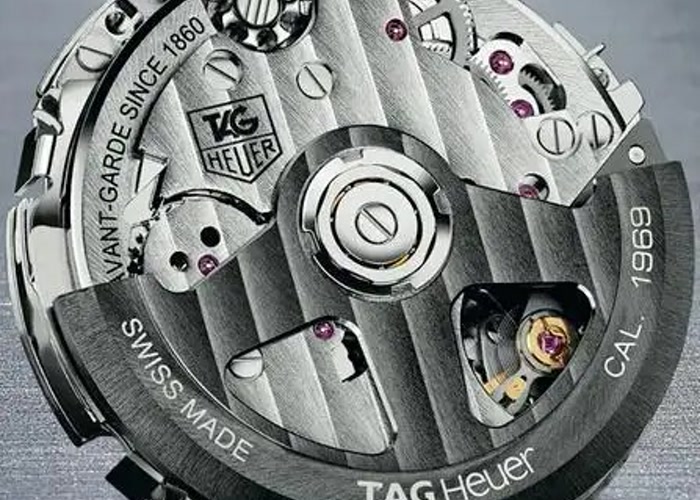
Customizing a movement, even with something as simple as a branded rotor, significantly increases the MOQ.3 While a standard movement might have a distributor MOQ of 50 قِطَع, adding a custom rotor will likely raise the effective MOQ to 300 قطع أو أكثر.
الغوص أعمق: The Process and Costs of Customization
This jump in MOQ from 50 ل 300 can be confusing, so let me break down the manufacturing logic behind it. The key is to understand that the movement distributor does not handle this type of customization.
Here's the typical process for creating a custom rotor:
-
Sourcing the Standard Movement: We, the factory, first procure the standard automatic movements (على سبيل المثال, سيكو NH35) from our distributor. As discussed, this purchase happens in lots, with a typical minimum of 50 وحدات.
-
Rotor Customization is a Separate Process: The plain, unbranded rotor is removed from the movement. This component is then sent to a specialized third-party supplier or handled by our in-house customization team. The customization is usually done through:
- Pad Printing: A precise method for printing a logo or design onto the rotor's surface.
- النقش بالليزر: Etching the design into the metal for a more permanent, high-end feel.
-
The MOQ of the Customization Itself: This is the critical part. The supplier doing the printing or engraving has their own setup costs. They have to create the printing plates or program the laser engraving machines. To make this setup process financially viable, they impose their own MOQ. In the Shenzhen supply chain, this number is very commonly 300 قِطَع.
-
Re-assembly and Quality Control: After the rotors are customized, they must be carefully re-installed onto the movements. This requires a skilled technician working in a clean environment to avoid contaminating the movement. An extra layer of quality control is then needed to ensure the rotor spins freely and the movement's timekeeping has not been affected.
The "custom movement MOQ" of 300 isn't set by the movement maker (سايكو) or the distributor. It's dictated by the minimum viable run for the customization process.
Fortunately, this 300-piece MOQ for a custom rotor aligns perfectly with our typical full-watch MOQ of 300-500 قِطَع. This means that if you are already planning a standard production run with us, adding a custom rotor doesn't force you into a higher order quantity for the final watch. It simply becomes one of the many components that we manage within that 300-piece project scope.
الأسئلة المتداولة
What is a typical MOQ for a standard Japanese movement?
From a distributor, the minimum order quantity for a standard, popular Japanese movement like a Miyota quartz or Seiko NH series automatic is typically 50 قِطَع. This is the smallest wholesale lot they will sell to a factory.
Can I mix different movement models to meet an MOQ?
عمومًا, no. The MOQ applies per specific model. على سبيل المثال, you cannot order 25 Seiko NH35 movements and 25 ميوتا 9015 movements to meet a 50-piece MOQ. Each model number is treated as a separate product with its own minimum order requirement.
Why is the MOQ for a custom rotor so much higher?
The MOQ for a custom rotor (حول 300 قِطَع) is set by the separate supplier who performs the customization, not the movement manufacturer. This minimum quantity is required to cover their setup costs for tooling, machine programming (for printing or engraving), and labor.
Is the movement MOQ the same as the final watch MOQ?
لا, they are different. The movement MOQ (على سبيل المثال, 50 قِطَع) is just for that single component. The final watch MOQ from a factory like ours (على سبيل المثال, 300-500 قِطَع) is higher because it must cover the MOQs of all parts—case, الاتصال الهاتفي, الأيدي, حزام, packaging—plus the costs of assembly and quality control.
خاتمة
Navigating the world of component sourcing is one of the biggest challenges for a new watch brand. When it comes to the movement, your choice has a direct impact on your upfront investment, production timeline, and overall risk. The key takeaway is clear: for brands looking for flexibility and a manageable entry point, Japanese manufacturers are the superior option for sourcing low MOQ watch movements. Their strategy of maintaining deep inventory of reliable models like the Seiko NH35 and Miyota 9015 provides the accessibility that new brands need. Swiss movements, while prestigious, are better suited for established brands ready to commit to higher volumes and longer lead times.
If you're planning your first watch collection and need guidance on selecting the right components to fit your budget and design, we're here to help. في Ohlala Watch, we leverage our 15+ years of experience in the Shenzhen supply chain to help brands like yours make smart, strategic sourcing decisions.
اتصل بنا اليوم على debbie.p@ohlalawatch.com أو قم بزيارة موقعنا صفحة الاتصال لبدء المحادثة.
"Swiss Movement vs. Japanese Movement: What's the Difference?", https://www.rzewatches.com/blogs/rzine/swiss-movement-vs-japanese-movement?srsltid=AfmBOooFDAToBwsa8UtR6lSGwqwVk5Us26jCjbPzzGYEKYQmn8KYCNP6. A study comparing global watch movement manufacturers found that Japanese brands like Miyota and Seiko maintain larger inventories and offer lower MOQs than Swiss manufacturers, who often operate on a made-to-order basis. دور الأدلة: public_support; نوع المصدر: بحث. يدعم: Japanese movements are more accessible for low MOQ orders compared to Swiss movements.. ملاحظة النطاق: The comparison may not account for all manufacturers or niche models within each region. ↩
"ETA SA", https://en.wikipedia.org/wiki/ETA_SA. Industry analyses indicate that Swiss manufacturers like Sellita and ETA often require higher MOQs and operate on longer lead times due to their made-to-order production model. دور الأدلة: public_support; نوع المصدر: بحث. يدعم: Swiss movements typically have higher MOQs and longer lead times than Japanese movements.. ملاحظة النطاق: The findings may not apply to all Swiss manufacturers or niche models. ↩
"Why You Should Swap Out Your Watch Rotor", https://www.namokimods.com/blogs/namokitimes/why-you-should-swap-out-your-watch-rotor?srsltid=AfmBOoq8S_w4UOoh4kl6fZFojTh6ISo2lZLJt9A8L029c8D3rtFwhr5n. Educational resources on manufacturing explain that customization often raises MOQs due to tooling and setup costs. دور الأدلة: آلية; نوع المصدر: تعليم. يدعم: Customization processes increase MOQs due to setup costs and supplier requirements.. ملاحظة النطاق: The explanation may not specifically address watch movements but applies broadly to customized components. ↩