
You designed a beautiful, unique watch case, but the quote came back higher than expected. It's a frustrating situation that can stall your project before it even begins.
A complex watch case costs more because of the manufacturing process, not just the material. Extra machining time, specialized fixtures, manual finishing, and higher defect rates for difficult shapes all add up. These process-driven costs are the main reason for the higher price.
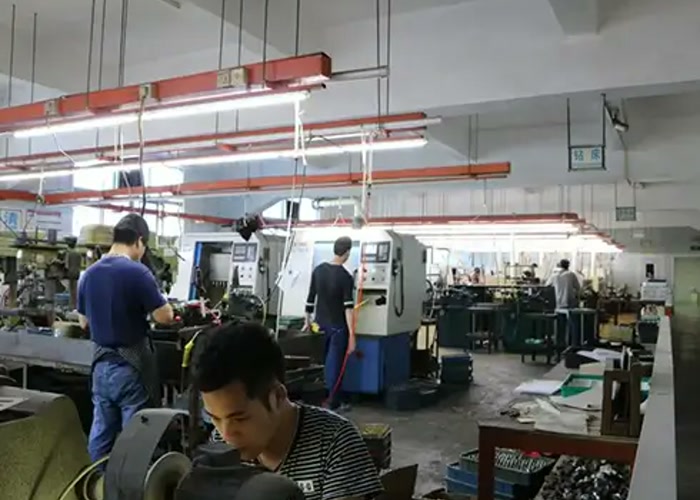
I've spent over 15 years helping brands turn their designs into real watches. I've seen countless brilliant ideas come across my desk. I've also had to explain why a seemingly small design choice can have a big impact on the final unit cost. It’s rarely about the weight of the steel. It's about the hours, الأيدي, and risks involved in shaping that steel. Let's break down exactly where those costs come from, so you can make informed decisions for your next collection.
Does a Multi-Part Case Always Cost More Than a Single Block?
You have a choice: make your case from one solid piece (monobloc) or multiple parts. You might think one piece is always cheaper, but it's a major source of hidden costs.
A multi-part case can sometimes be more cost-effective. While it requires more parts and assembly, it isolates risk. If one part is flawed, you only scrap that part, not the entire expensive case. This is crucial for complex designs.
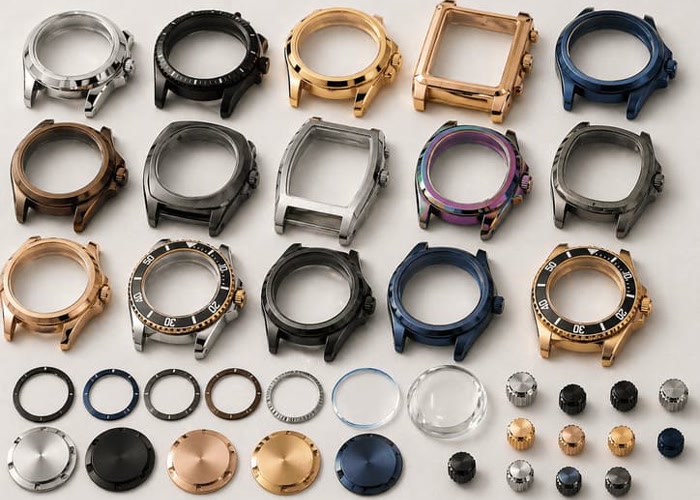
A single-block case sounds simple, but machining a complex shape from one piece is incredibly difficult. If there's a mistake deep inside a lug or near the end of a long machining cycle, the whole piece is wasted. With a multi-part construction (like a separate bezel, mid-case, and case back), the individual parts are simpler to make.
I remember a project with an integrated bezel and mid-case. A tiny scratch on the bezel during the final polishing step meant we had to discard the entire unit, which had already undergone hours of expensive CNC work. For the next production run, we suggested a separate bezel. The initial tooling cost was slightly higher for the new part and gasket, but the scrap rate dropped significantly, lowering the final unit price. It's a trade-off.
Key Decision Factors: Monobloc vs. Multi-Part
| Factor | Monobloc Case | Multi-Part Case |
|---|---|---|
| Rework Risk | عالي (one error scraps the whole piece) | قليل (only the flawed part is scrapped) |
| حَشد | Simpler (fewer parts to assemble) | More complex (requires gaskets, screws) |
| الأدوات (NRE) | Can be higher for complex internal shapes | Higher for more individual part molds/tools |
| أفضل ل | Simple, classic case shapes | Complex designs, mixed finishes, serviceability |
When you choose a multi-part design, you accept some upfront investment in things like gaskets and assembly fixtures. But in return, you get better control over quality and a more stable cost per unit, especially when your MOQ is high enough to absorb these initial costs.
How Do Lugs and Curves Drive Up Machining Time?
Your design features sharp inner corners, dramatic swooping lugs, or deep, sculpted crown guards. These details look amazing, but they are what make a CNC machine work overtime, directly increasing costs.
Complex curves and sharp internal angles require more advanced, multi-axis CNC machines and many more steps. Each time we have to re-position the case to cut a new angle, it adds time and cost.
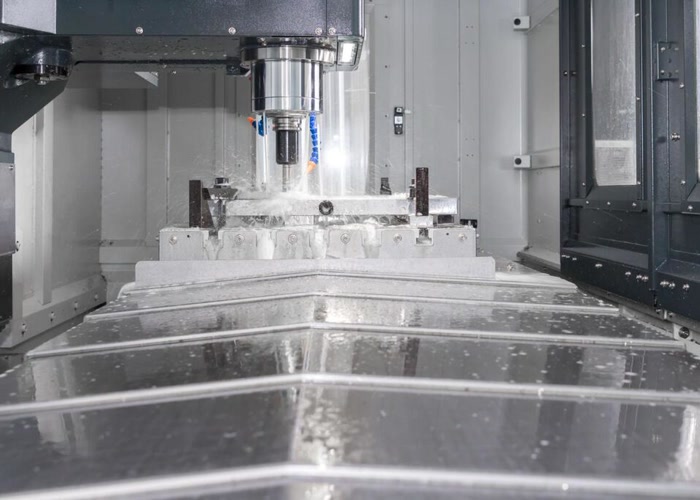
Think of a simple CNC machine as moving in three directions (up-down, left-right, forward-back). It's great for flat surfaces and simple curves. But to create a small, sharp corner inside a lug or a shape that curves in multiple directions at once, we need a 5-axis machine. These machines are more expensive to run. More importantly, we have to create custom fixtures, or jigs, to hold the case perfectly still for each specific cut. Changing the case from one fixture to another is a manual process that stops production and adds labor hours.
I once quoted a design with beautiful, twisted lugs. The client was shocked by the price difference compared to their previous, simpler model. I had to show them the DFM (تصميم للتصنيع) report. Their old case needed two setups on the CNC machine. The new one needed five. Those three extra setups, each with its own custom fixture, were responsible for most of the cost increase. By slightly relaxing an inner curve (increasing the radius), we eliminated one setup and brought the cost back into their budget without changing the overall look.
Impact of Geometry on Machining
| Design Feature | Machining Impact | How to Reduce Cost |
|---|---|---|
| Tight Inner Corners | Requires small tools, slow speeds, 5-axis CNC | Increase the corner radius (R-value) |
| Complex Curves/Lugs | Needs multiple setups and fixtures | Simplify curves to align with 3 or 4-axis tool paths |
| Deep Undercuts | Forces special tooling and setups | Redesign to allow easier tool access |
| Sculpted Crown Guards | Adds complexity and potential for tool collision | Simplify the transition from guard to case body |
Every decision here is a balance. The most "machinable" design isn't always the most beautiful. The key is understanding what drives the machining hours, so you can choose where to invest your budget for the most visual impact.
Why Does Adding Polished and Brushed Surfaces Increase the Price?
You want a case with a brushed top, polished sides, and a sandblasted section between the lugs. This mixed finishing is a hallmark of premium watches, but it's also a major cost driver.
Every different finish on a single case part adds manual labor. Workers have to carefully mask off each area by hand before polishing or brushing another, which is slow and requires great skill.
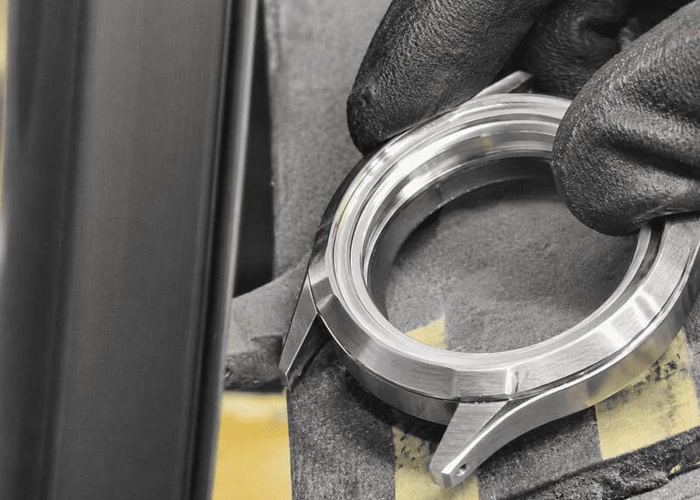
Unlike machining, which is mostly automated, finishing is largely done by hand. To create a crisp line between a brushed and a polished surface, a skilled worker must apply protective tape (masking) precisely along the boundary. Then, they finish one surface. After that, they remove the tape, re-apply new tape to protect the finished area, and then work on the next surface. This process is repeated for every single finish on every single watch case.
The risk here is high. If a polishing wheel slips and touches a brushed area, the entire case might have to go back to the beginning of the finishing process. This re-work is expensive. I've seen projects where the cost of finishing exceeded the cost of the raw machining because the design had five different finishes on the case side alone. We worked with the designer to reduce this to three zones with clearer, simpler boundaries. The final product still looked fantastic, but the consistency in mass production was much higher and the unit cost dropped by nearly 20%.
Finishing Zones and Cost
| Number of Finishes | Process Complexity | Consistency Risk | Cost Impact |
|---|---|---|---|
| 1 (على سبيل المثال, all brushed) | قليل (no masking needed) | High consistency | قليل |
| 2 (على سبيل المثال, مصقول & نحى) | واسطة (one masking step) | معتدل | واسطة |
| 3+ (على سبيل المثال, mixed) | عالي (multiple masking steps) | عالي (risk of errors increases) | عالي |
When designing, try to limit the number of distinct finish zones. If you need mixed finishes, design the transition lines to be on clear edges or steps in the geometry. This makes it much easier for workers to apply the masking tape consistently, which is the key to getting 500 watches that all look the same.
Can Plating a Complex Case Really Affect the Final Cost?
You've finalized the case shape and now you want it in black, ذهب, or another color using PVD or IP plating. The complex shape you designed can cause major problems here, أيضاً.
نعم, plating a complex case costs more because irregular shapes can cause uneven color.1 This requires custom hangers and more masking, and a higher percentage of parts will need to be rejected or replated, increasing the overall cost.
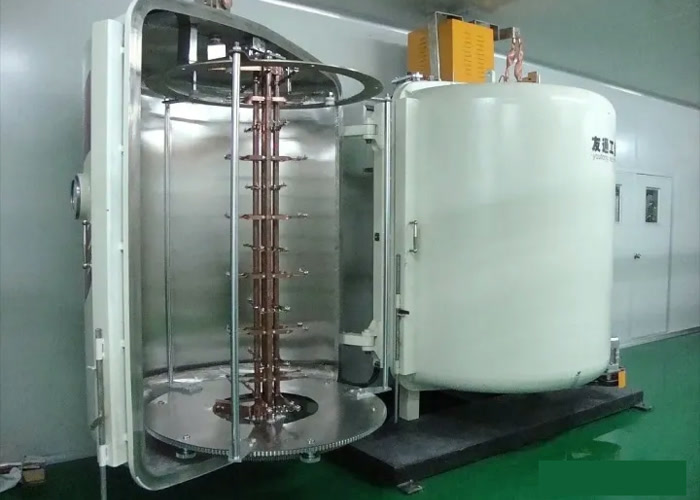
IP (Ion Plating) happens in a vacuum chamber. The coating material travels in a straight line to the watch case. If your case has deep grooves, sharp angles, or overhanging parts, these areas can fall into a "shadow," preventing the coating from reaching them evenly. This results in spots with thin color or a completely different shade. To solve this, we have to create custom hangers that rotate and position each case perfectly. This is a one-time engineering cost (NRE) that gets added to your order.
Even with custom hangers, the yield rate (the percentage of perfectly coated parts) is lower for complex shapes. على سبيل المثال, a simple round case might have a 98% yield. A complex, angular case might only have an 85% yield. This means for every 100 cases we plate, 15 are rejected. The cost of those rejected parts has to be factored into the price of the good ones. For a recent project with a very intricate case, we advised the client to switch from a glossy black PVD, which shows every tiny flaw, to a matte grey. The matte finish was more forgiving of slight variations, which improved the yield and lowered the final price.
Plating Factors for Complex Shapes
| Factor | وصف | How to Manage Cost |
|---|---|---|
| Shadowing | Parts of the case are blocked from the coating material. | Simplify deep grooves; ensure good "line of sight" to all surfaces. |
| Custom Hangers (NRE) | Special fixtures needed to hold the case for even coating. | Budget for this NRE; it's unavoidable for complex shapes. |
| Yield Rate | The percentage of successfully plated parts. | Choose more forgiving colors/finishes (على سبيل المثال, matte over gloss). |
| Masking | If only parts of the case are plated, masking is needed. | Minimize the need for partial plating on complex geometries. |
Think about plating early in your design process. Sometimes, a small tweak to an angle or the depth of a groove can make a huge difference in plating yield, saving you time and money.
خاتمة
The price of your watch case is a story of process. By understanding how structure, شكل, التشطيب, and plating affect manufacturing time and risk, you can design smarter and control costs.
"How Does Part Geometry Affect Plating?", https://americanelectro.com/how-does-part-geometry-affect-plating/. Government studies have shown that complex geometries in plating processes can lead to increased costs due to lower yield rates and the need for custom fixtures. دور الأدلة: إحصائية; نوع المصدر: حكومة. يدعم: The source should provide statistical data on the costs associated with plating complex shapes and their yield rates.. ملاحظة النطاق: The data may be specific to certain plating technologies and not universally applicable. ↩